
Who owns Amazon in 2024? Discover Jeff Bezos' stake, major institutional shareholders, and the complete ownership structure of the e-commerce giant.
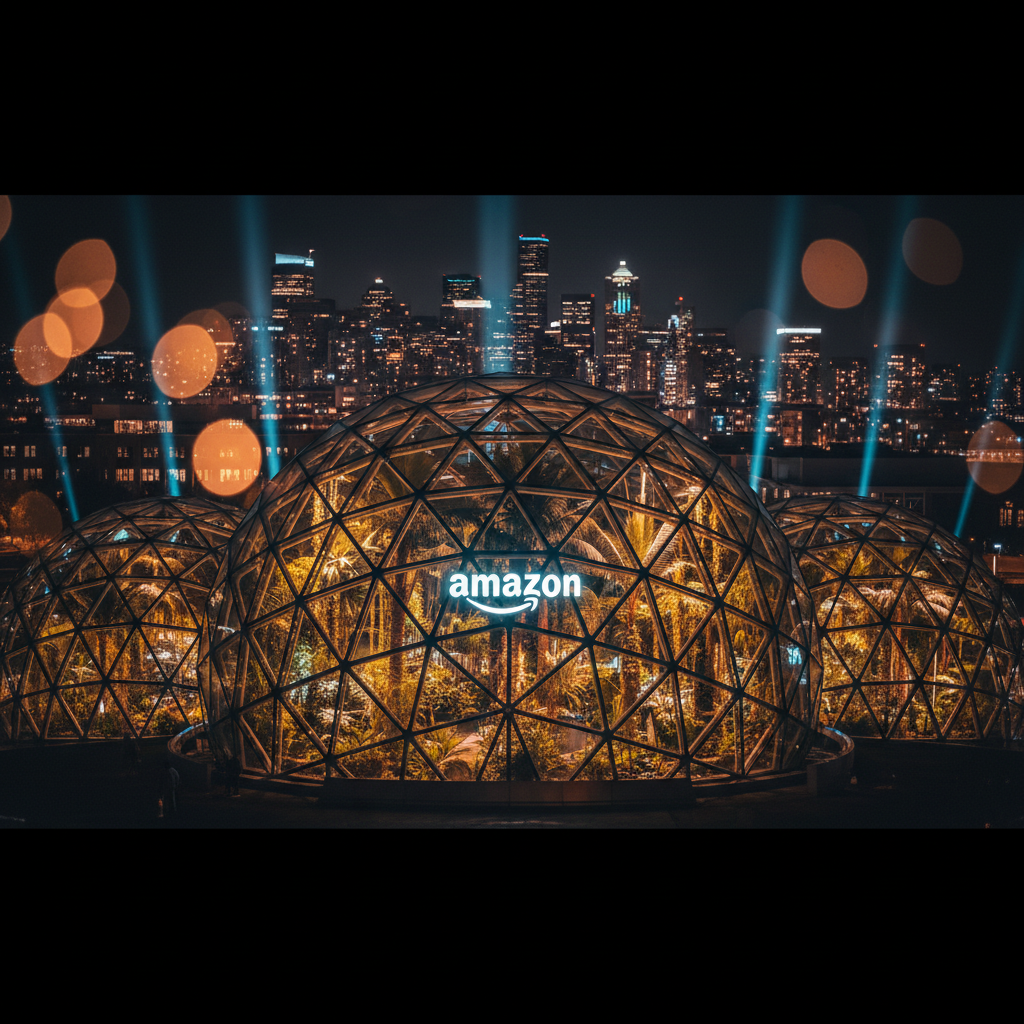
When people ask "who owns Amazon," the answer reveals a fascinating snapshot of modern corporate ownership. Amazon is a publicly traded company (NASDAQ: AMZN) with shares distributed among thousands of institutional investors, individual shareholders, and company insiders. Jeff Bezos, who founded Amazon in 1994, remains the largest individual shareholder with approximately 9.5% of the company's outstanding shares as of 2024. However, the majority of Amazon's ownership is spread across major institutional investors including Vanguard Group, BlackRock, and State Street Corporation, which collectively manage substantial stakes on behalf of millions of individual investors through mutual funds and ETFs.
Amazon's ownership structure represents the typical composition of a large-cap public technology company. The company has approximately 10.5 billion shares outstanding, with a market capitalization fluctuating between $1.3 trillion and $1.8 trillion depending on market conditions in 2024.
The ownership breaks down into three primary categories. Institutional investors control roughly 58% of Amazon's total shares, representing pension funds, mutual funds, ETFs, and other investment vehicles. Individual insider ownership, primarily Jeff Bezos and other executives, accounts for approximately 10% of shares. The remaining 32% consists of retail investors and other entities holding smaller positions.
This distribution reflects Amazon's evolution from a founder-controlled startup to a widely held public corporation. Unlike some tech companies that maintain dual-class share structures giving founders outsized voting power, Amazon operates with a single class of common stock. Each share carries one vote, meaning voting power directly correlates with ownership percentage.
The company's broad ownership base provides significant liquidity and capital access while diluting individual control. This structure has allowed Amazon to raise capital for aggressive expansion into cloud computing, logistics infrastructure, and new business ventures without requiring Bezos to maintain majority control.
Jeff Bezos founded Amazon in his Seattle garage in 1994, initially focusing on online book sales. At the company's IPO in May 1997, Bezos owned approximately 42% of Amazon's shares. Over the subsequent 27 years, his ownership percentage has steadily declined through share dilution from employee stock compensation, acquisitions, and personal stock sales.
As of 2024, Bezos owns approximately 988 million shares of Amazon, representing about 9.5% of the company. At Amazon's trading price around $175 per share, this stake is worth approximately $173 billion, making it the largest component of his personal wealth. Despite stepping down as CEO in July 2021 to become Executive Chairman, Bezos remains Amazon's largest individual shareholder and maintains significant influence over company strategy.
Bezos has systematically reduced his Amazon holdings over the years to fund other ventures. He sells roughly $1 billion to $10 billion worth of Amazon stock annually, primarily to finance Blue Origin, his space exploration company, and various philanthropic initiatives including the Bezos Earth Fund. His divorce settlement with MacKenzie Scott in 2019 resulted in transferring approximately 4% of Amazon's shares to her, representing one of the largest ownership transfers in corporate history.
Despite these reductions, Bezos shows no indication of relinquishing his position as the company's anchor shareholder. His voting power, combined with his founder status and board position, ensures his continued influence over Amazon's strategic direction.
Institutional ownership of Amazon reflects the company's status as a core holding in countless investment portfolios. The three largest institutional shareholders are the "Big Three" index fund managers: Vanguard Group, BlackRock, and State Street Corporation.
Vanguard Group holds the largest institutional position with approximately 665 million shares, representing about 6.3% of Amazon's outstanding stock. This position is worth over $115 billion at current market prices. Vanguard holds these shares across numerous funds, including the Vanguard Total Stock Market Index Fund and Vanguard 500 Index Fund, meaning millions of individual investors indirectly own Amazon through their Vanguard accounts.
BlackRock ranks as the second-largest institutional investor with roughly 590 million shares, or approximately 5.6% of the company. Like Vanguard, BlackRock manages these shares across various index funds and ETFs, with the iShares Core S&P 500 ETF being a significant holder. BlackRock's position is valued at approximately $103 billion.
State Street Corporation holds approximately 350 million shares, representing about 3.3% of Amazon. Much of this position is managed through the SPDR S&P 500 ETF Trust (SPY), one of the world's largest and most traded ETFs. State Street's stake is worth roughly $61 billion.
These institutional investors serve as passive holders, tracking major indices rather than making active investment decisions about Amazon. Their ownership provides stability and long-term capital commitment, though they exercise voting rights on shareholder proposals and board elections.
The following table presents Amazon's ten largest shareholders as of 2024, combining both individual and institutional investors:
| Shareholder | Shares Held (millions) | Ownership % | Approximate Value |
|---|---|---|---|
| Jeff Bezos | 988 | 9.5% | $173 billion |
| Vanguard Group | 665 | 6.3% | $116 billion |
| BlackRock | 590 | 5.6% | $103 billion |
| State Street Corporation | 350 | 3.3% | $61 billion |
| Fidelity Investments | 215 | 2.0% | $38 billion |
| Geode Capital Management | 145 | 1.4% | $25 billion |
| T. Rowe Price | 120 | 1.1% | $21 billion |
| Northern Trust | 95 | 0.9% | $17 billion |
| Charles Schwab Investment Management | 88 | 0.8% | $15 billion |
| MacKenzie Scott | 85 | 0.8% | $15 billion |
Beyond these top holders, thousands of smaller institutional investors, family offices, and hedge funds maintain positions in Amazon. Notable hedge fund holders include Tiger Global Management, Lone Pine Capital, and Coatue Management, each holding positions worth billions of dollars.
The concentration of ownership among the top shareholders is significant but not overwhelming. The top ten shareholders collectively control approximately 32% of Amazon's shares, meaning nearly 70% of the company is distributed among thousands of other entities and individuals.
Amazon's ownership structure has transformed dramatically since the company's founding three decades ago. When Bezos started Amazon in 1994, he owned 100% of the company, initially funding it with personal savings and loans from family members.
The first major ownership dilution occurred during Amazon's Series A funding round in 1995, when Kleiner Perkins invested $8 million at a $60 million valuation. This reduced Bezos's stake to approximately 47%. Additional venture capital rounds in 1996 brought in investors including General Atlantic and resulted in further dilution.
Amazon's IPO in May 1997 marked the most significant ownership transition. The company offered 3 million shares at $18 per share, raising $54 million and reducing Bezos's ownership to roughly 42%. Following the IPO, Amazon traded on NASDAQ under the ticker AMZN, beginning its journey as a public company.
The dot-com boom and bust of 1999-2001 brought volatility but also opportunity. Amazon's stock price soared to over $100 per share in 1999 before crashing to under $10 in 2001. Despite this turbulence, the company continued issuing stock for employee compensation and acquisitions, gradually diluting all shareholders proportionally.
The 2000s and 2010s saw Bezos systematically reduce his stake through planned stock sales. Major reductions occurred around 2017-2019 when Bezos sold billions of dollars worth of shares annually. The 2019 divorce settlement with MacKenzie Scott transferred approximately 4% of Amazon's shares, instantly making her one of the world's wealthiest individuals.
Stock splits have also affected nominal ownership percentages. Amazon executed a 20-for-1 stock split in June 2022, multiplying all shareholders' shares by 20 while dividing the stock price by 20. This made Amazon stock more accessible to retail investors but didn't change fundamental ownership percentages.
Amazon operates as a Delaware corporation, a common choice for large U.S. companies due to favorable corporate law. The company's governance structure follows standard public company practices with a board of directors overseeing management and representing shareholder interests.
Amazon's board consists of 11 directors as of 2024. Jeff Bezos serves as Executive Chairman, while Andy Jassy, who succeeded Bezos as CEO in July 2021, also holds a board seat. The remaining nine directors are independent, including notable figures like former Pepsi CEO Indra Nooyi, former Secret Service Director Keith Alexander, and Starbucks Chairman Howard Schultz.
The board operates through several committees including Audit, Compensation, and Nominating and Corporate Governance committees. These committees handle specialized oversight functions like financial reporting, executive compensation, and board composition.
Amazon's governance structure gives shareholders voting rights proportional to their ownership. Major decisions requiring shareholder approval include board elections, executive compensation plans, and significant corporate actions like mergers. Annual shareholder meetings provide a forum for voting on proposals and engaging with management.
Unlike some tech companies that use dual-class share structures to maintain founder control, Amazon's single-class structure means Bezos's influence derives purely from his ownership percentage and board position rather than supervoting shares. This gives institutional investors meaningful voice through their collective ownership.
The company has faced governance challenges including shareholder proposals on labor practices, climate disclosures, and diversity reporting. While management has opposed many of these proposals, the growing ownership by ESG-focused institutional investors has increased pressure for enhanced corporate responsibility reporting.
The question of whether Jeff Bezos still controls Amazon requires distinguishing between formal control and practical influence. In formal terms, Bezos does not control Amazon in the way a majority shareholder controls a private company. His 9.5% ownership stake, while the largest individual position, represents a minority stake that cannot unilaterally direct company decisions.
However, Bezos maintains substantial influence through multiple channels. As Executive Chairman, he holds a board seat and participates in strategic planning and major decisions. His founder status and long-standing leadership give him moral authority and respect within the organization that transcends his ownership percentage.
Bezos's influence appears most evident in Amazon's continued commitment to core principles he established, including customer obsession, long-term thinking, and willingness to sacrifice short-term profits for market position. These values permeate Amazon's culture and decision-making even under CEO Andy Jassy's leadership.
Practically, major strategic pivots would be difficult without Bezos's support given his ownership stake and board position. If Bezos opposed a decision like a major acquisition or business exit, his voice would carry enormous weight even if he couldn't formally block it.
That said, Amazon functions as a professionally managed public company, not a founder-controlled enterprise. Day-to-day operations and most strategic decisions flow through the CEO and senior management team without requiring Bezos's involvement. The extensive institutional ownership provides checks on any individual's power, including Bezos.
The arrangement represents a middle ground common among mature tech companies. Bezos maintains significant influence and engagement while allowing professional management to run operations and institutional investors to provide governance oversight.
Amazon's ownership structure significantly influences corporate decision-making, creating a balance between different stakeholder interests. The broad institutional ownership pushes Amazon toward conventional public company behaviors like profitability and shareholder returns, while Bezos's significant stake enables continued long-term strategic thinking.
Institutional investors, particularly the passive index fund managers who dominate Amazon's shareholder base, generally support management decisions and rarely intervene in strategy. However, they increasingly flex their muscles on environmental, social, and governance issues. Vanguard, BlackRock, and State Street have all expanded their ESG voting policies, pressuring Amazon on climate commitments, labor practices, and board diversity.
This pressure has produced tangible results. Amazon committed to reaching net-zero carbon emissions by 2040, expanded climate-related disclosures, and added diversity metrics to executive compensation. These changes partly reflect institutional investor preferences expressed through proxy votes and engagement.
Bezos's substantial ownership enables Amazon to maintain its distinctive culture of long-term thinking and reinvestment. His willingness to prioritize market share and customer experience over short-term profits set Amazon apart from competitors that face greater pressure for immediate earnings. This philosophy persists under Jassy's leadership, suggesting ownership structure supports strategic continuity.
The ownership composition also affects capital allocation decisions. Amazon reinvests most profits into business expansion rather than paying dividends or buying back stock, a choice that frustrated some investors but reflects Bezos's long-term orientation. The company initiated its first stock buyback program in 2022, authorizing up to $10 billion in repurchases, potentially signaling shifting priorities as institutional ownership grows.
Activist investors occasionally accumulate Amazon positions to push specific changes, though their influence remains limited given the company's size and stable ownership base. No activist has successfully forced major strategic changes, reflecting the alignment between management, Bezos, and most institutional investors.
Amazon's ownership structure enables its distinctive strategic approach, characterized by aggressive expansion, customer focus, and tolerance for experimentation. This strategy would be difficult to maintain under different ownership arrangements.
Public ownership provides Amazon with tremendous capital access. The company raised over $100 billion through stock issuance over its history, funding expansion into cloud computing (AWS), logistics infrastructure, original content, and physical retail. This capital availability enabled Amazon to outinvest competitors and achieve dominant market positions.
Simultaneously, Bezos's large stake and founder status protected long-term strategic bets that might have faced resistance from short-term focused owners. AWS, now Amazon's most profitable division generating over $80 billion in annual revenue, operated at losses for years before achieving profitability. A company with different ownership might have killed the project under pressure for immediate returns.
Amazon's willingness to enter low-margin businesses like grocery retail and physical stores reflects ownership patience for extended payback periods. The company accepts thin margins in retail while extracting higher returns from AWS and advertising, a portfolio strategy requiring patient capital.
The ownership structure also influences Amazon's approach to acquisitions. Major purchases like Whole Foods ($13.7 billion in 2017) and MGM Studios ($8.5 billion in 2022) received board approval and shareholder acceptance partly because Bezos's ownership signaled commitment to integration and long-term value creation.
Amazon's competitive aggressiveness, sometimes attracting regulatory scrutiny, partially reflects ownership dynamics. Without the pressure to maximize quarterly earnings that constrains some competitors, Amazon can price aggressively and invest in market share expansion. This strategy has produced dominant positions in e-commerce, cloud infrastructure, and emerging categories like smart speakers.
Labor practices represent one area where ownership influences strategy. Institutional investors increasingly push Amazon on warehouse working conditions, unionization responses, and employee treatment. While management has resisted some demands, growing ESG-focused ownership will likely continue pressuring Amazon toward improved labor practices.
Yes, Jeff Bezos still owns Amazon stock and remains the company's largest individual shareholder. He holds approximately 988 million shares, representing about 9.5% of Amazon's outstanding stock as of 2024. While he stepped down as CEO in 2021, he continues serving as Executive Chairman and maintains significant influence over company strategy.
Jeff Bezos owns approximately 9.5% of Amazon's outstanding shares as of 2024. This represents roughly 988 million shares out of Amazon's 10.5 billion total shares outstanding. His ownership percentage has declined from about 42% at the time of Amazon's IPO in 1997 due to stock sales and dilution from employee compensation and acquisitions.
Jeff Bezos is the largest individual shareholder of Amazon with approximately 9.5% of the company. However, the largest institutional shareholder is Vanguard Group, which holds about 6.3% of Amazon's shares across its various index funds and ETFs. Vanguard manages these shares on behalf of millions of individual investors.
Amazon is a publicly owned company that trades on the NASDAQ stock exchange under the ticker symbol AMZN. The company went public in May 1997 with an initial public offering priced at $18 per share. As a public company, Amazon's shares can be purchased by anyone through standard brokerage accounts, and the company must comply with SEC reporting requirements and corporate governance standards.
Jeff Bezos's Amazon stake is worth approximately $173 billion as of 2024, based on his ownership of roughly 988 million shares and Amazon's stock price around $175 per share. This valuation fluctuates with Amazon's stock price and represents the largest component of Bezos's total net worth, which typically ranks him among the world's wealthiest individuals.
Understanding who owns Amazon reveals the complex ownership dynamics of modern mega-cap technology companies. While Jeff Bezos remains the largest individual shareholder with approximately 9.5% of Amazon's stock, the majority of the company is owned by institutional investors managing funds on behalf of millions of individual investors. This ownership structure creates a balance between Bezos's long-term strategic vision and the governance oversight provided by major institutional shareholders like Vanguard, BlackRock, and State Street.
The evolution from Bezos's 100% ownership at founding to today's broadly distributed ownership reflects Amazon's transformation from a startup to one of the world's most valuable companies. This ownership composition has enabled Amazon to access enormous capital for expansion while maintaining the founder-driven culture that shaped its competitive strategy. As institutional ownership grows and ESG considerations become more prominent, Amazon's ownership structure will continue influencing how the company balances growth, profitability, and stakeholder responsibilities.


