
Business Design

Who owns Ferrari? Discover Ferrari's ownership structure, including Exor N.V., Piero Ferrari, and public shareholders in this detailed breakdown.
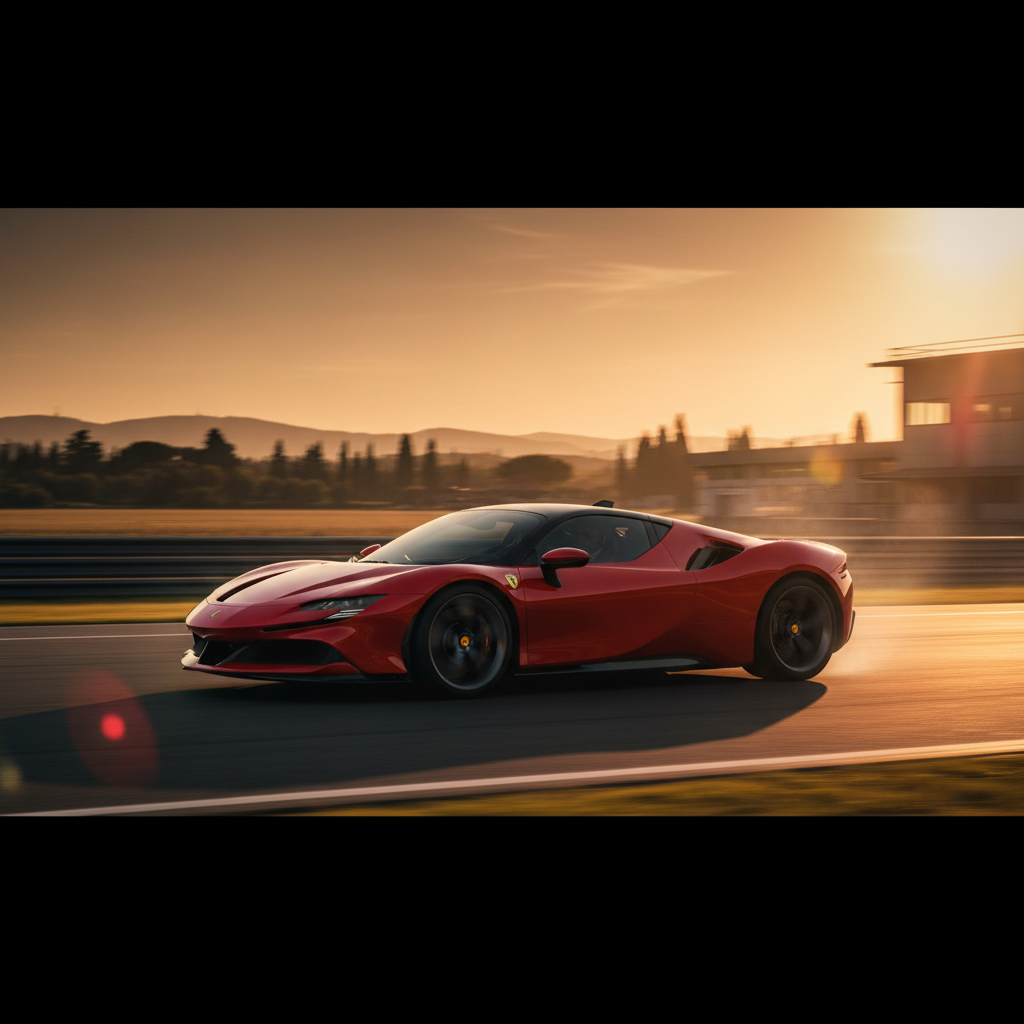
When luxury automotive enthusiasts and investors ask "who owns Ferrari," the answer reveals a sophisticated ownership structure built around Italian industrial heritage. Ferrari N.V., the legendary supercar manufacturer, is primarily owned by Exor N.V. (with approximately 24% of shares and 36% of voting rights), Piero Ferrari (the founder's son, holding roughly 10%), and public shareholders who own the remaining shares traded on both the New York Stock Exchange and Borsa Italiana. This unique blend of family influence, institutional control, and public ownership has shaped Ferrari into one of the world's most valuable automotive brands, with a market capitalization exceeding $70 billion as of 2024.
Ferrari operates as a publicly traded company with a distinctive ownership composition that balances legacy, strategic control, and market participation. The company's shares are listed on both the New York Stock Exchange under the ticker symbol "RACE" and on the Euronext Milan exchange.
The ownership breakdown consists of three primary groups. Exor N.V., the Dutch holding company controlled by Italy's Agnelli family, maintains the largest single stake with approximately 24% of Ferrari's equity and 36% of voting rights. This voting power advantage stems from Ferrari's dual-class share structure, which gives certain shareholders enhanced influence over corporate decisions.
Piero Ferrari, son of founder Enzo Ferrari, holds approximately 10% of the company's shares. His stake represents the direct family connection to Ferrari's founding legacy and provides him with significant influence despite being a minority shareholder. Piero has maintained his position since the company's 2016 public offering and serves as vice chairman.
The remaining roughly 66% of Ferrari's shares are held by institutional investors and individual shareholders through public markets. Major institutional holders include leading investment firms such as Vanguard Group, BlackRock, and various sovereign wealth funds. This diverse shareholder base provides Ferrari with access to global capital markets while maintaining concentrated control through the Exor-Ferrari family alliance.
Ferrari's market capitalization fluctuates with trading but has consistently positioned the company among the most valuable automotive manufacturers globally, often surpassing companies that produce millions more vehicles annually. This valuation reflects Ferrari's unique positioning as both a luxury goods company and an automotive manufacturer.
The Agnelli family's connection to Ferrari runs through Exor N.V., a Netherlands-based holding company with a storied history in Italian industry. Exor is controlled by the Agnelli family, descendants of Giovanni Agnelli, who founded Fiat in 1899. John Elkann, great-great-grandson of Giovanni Agnelli, currently serves as CEO of Exor and chairman of Ferrari.
Exor's investment portfolio extends far beyond Ferrari. The holding company controls significant stakes in Stellantis (the automotive conglomerate formed by the merger of Fiat Chrysler and PSA Group), CNH Industrial, Juventus Football Club, The Economist Group, and various other enterprises. Ferrari represents one of Exor's crown jewels, contributing substantially to the holding company's overall valuation.
The Agnelli family's stewardship philosophy emphasizes long-term value creation over short-term profit maximization. This approach aligns perfectly with Ferrari's brand strategy of maintaining exclusivity through limited production volumes, even when demand far exceeds supply. John Elkann's leadership has been instrumental in protecting Ferrari's independence while supporting its strategic evolution.
Exor's ownership position gives the Agnelli family effective control over major strategic decisions despite not holding a majority of equity. The enhanced voting rights associated with their shares ensure that decisions about Ferrari's direction, production strategy, brand partnerships, and long-term investments remain aligned with the family's vision for the company.
The relationship between Exor and Ferrari extends beyond typical shareholder dynamics. Exor provides strategic guidance, access to capital markets expertise, and connections across the global luxury and automotive sectors. This support system has proven valuable as Ferrari navigates challenges including electrification, regulatory changes, and evolving consumer preferences in the luxury market.
Ferrari's public shareholders represent a diverse group of institutional investors, mutual funds, and individual investors who collectively own approximately 66% of the company's equity. The decision to list Ferrari's shares on major exchanges transformed the company's capital structure and created new opportunities for growth.
Major institutional investors hold substantial positions in Ferrari. Vanguard Group typically maintains a stake of around 5-6% through various index funds and actively managed portfolios. BlackRock, another investment giant, holds a similar percentage. These institutional investors provide stability and liquidity to Ferrari's stock while generally supporting management's long-term strategic vision.
Sovereign wealth funds from the Middle East and Asia have also taken positions in Ferrari, attracted by the brand's global prestige and strong financial performance. These investors typically maintain longer investment horizons than many hedge funds or active traders, contributing to share price stability.
The geographic distribution of Ferrari's shareholder base reflects its global appeal. While Italian and European investors maintain significant positions, North American investors constitute the largest bloc of public shareholders, followed by Asian and Middle Eastern institutional investors. This international distribution helps Ferrari access diverse capital pools and reduces dependence on any single market.
Ferrari's stock performance has been remarkable since its 2016 initial public offering. Shares priced at $52 during the IPO have multiplied several times over, delivering substantial returns to early public investors. The stock has generally traded at a significant premium to traditional automotive manufacturers, with price-to-earnings ratios more comparable to luxury goods companies than volume car producers.
Dividend policy represents another aspect of Ferrari's relationship with public shareholders. The company has maintained a progressive dividend policy, steadily increasing payouts as earnings grow. This commitment to returning capital to shareholders while simultaneously investing in future technologies demonstrates management's balanced approach to capital allocation.
Piero Ferrari occupies a unique position in the company's ownership structure as the only living child of founder Enzo Ferrari. Born in 1945, Piero maintains approximately 10% ownership in the company that bears his family name, making him a billionaire and one of Italy's wealthiest individuals.
Piero's relationship with Ferrari spans decades of involvement in various capacities. He has served as vice chairman of the company and maintains an active interest in preserving his father's legacy while supporting Ferrari's evolution. Unlike purely financial investors, Piero brings intimate knowledge of Ferrari's history, culture, and founding principles.
His stake represents more than financial value. Piero serves as a living connection to Enzo Ferrari's vision and philosophy. When major strategic decisions arise, particularly those touching on brand heritage and racing legacy, Piero's voice carries weight beyond his 10% equity position. His presence provides continuity and authenticity that resonates with Ferrari enthusiasts worldwide.
Piero has been selective about reducing his ownership stake. While he participated in the 2016 public offering by selling a portion of his shares, he retained a substantial position that signals long-term confidence in the company's direction. His decision to maintain significant ownership rather than liquidating his inheritance demonstrates commitment to Ferrari's future.
The relationship between Piero Ferrari and the Agnelli family through Exor has generally been collaborative. Together, their combined stakes represent roughly 34% of Ferrari's equity, providing substantial influence over corporate governance. This partnership between the founder's family and the Agnelli dynasty has proven effective in steering Ferrari through various challenges while maintaining its distinctive character.
Ferrari's ownership evolution reflects the broader transformation of European family businesses into modern corporate entities. Enzo Ferrari founded Auto Avio Costruzioni in 1939, which became Ferrari S.p.A. in 1947. For decades, Enzo maintained control while navigating financial pressures inherent in competing at the highest levels of motorsport and producing low-volume, hand-crafted automobiles.
Financial challenges in the 1960s led Enzo to seek partnership with larger automotive manufacturers. In 1969, Fiat acquired a 50% stake in Ferrari's road car division while Enzo retained control of the racing operations. This arrangement provided Ferrari with financial stability and access to Fiat's resources while preserving some autonomy for Enzo.
The relationship deepened over subsequent decades. When Enzo Ferrari passed away in 1988, Fiat increased its stake to 90%, with Piero Ferrari retaining 10%. This ownership structure remained relatively stable for nearly three decades, during which Ferrari transformed from a boutique manufacturer into a global luxury brand while maintaining its racing heritage.
Under Fiat and later Fiat Chrysler Automobiles (FCA) ownership, Ferrari benefited from shared technologies, purchasing power, and distribution networks. However, the brand always maintained distinct operations, separate facilities, and autonomous decision-making regarding product development and brand management. Ferrari's factory in Maranello operated independently from Fiat's mass-market production facilities.
The decision to separate Ferrari from FCA crystallized in 2015 when Sergio Marchionne, then CEO of FCA, announced plans to spin off Ferrari as an independent publicly traded company. Marchionne recognized that Ferrari's value was constrained within FCA's corporate structure and that both companies would benefit from separation.
The 2016 Ferrari spin-off from Fiat Chrysler Automobiles represents one of the most significant corporate separations in automotive history. The transaction structure was complex, designed to provide FCA shareholders value while establishing Ferrari as an independent entity with appropriate capital structure and ownership distribution.
FCA executed the separation through a combination of a distribution to existing shareholders and a concurrent public offering. FCA shareholders received approximately 80% of Ferrari's shares through a spin-off distribution, while Ferrari simultaneously sold approximately 10% of shares to new investors through an initial public offering on the New York Stock Exchange. Piero Ferrari maintained his 10% stake throughout the transaction.
The offering priced at $52 per share, valuing Ferrari at approximately $10 billion. This valuation immediately established Ferrari as more valuable than many automotive manufacturers producing exponentially more vehicles. Investor demand was strong, reflecting confidence in Ferrari's independent prospects and brand strength.
The separation logic was compelling for multiple reasons. Within FCA's corporate structure, Ferrari's unique characteristics were difficult for investors to properly value. The luxury supercar manufacturer's high margins, pricing power, and brand equity differed fundamentally from volume automotive manufacturing. Separation allowed each company to pursue optimal strategies without compromise.
For Ferrari, independence meant freedom to make long-term decisions without pressure to support FCA's mass-market operations or share technologies that might dilute brand exclusivity. Ferrari could establish its own capital allocation priorities, set production volumes based purely on brand strategy rather than parent company earnings needs, and access capital markets directly.
Exor, the Agnelli family holding company, orchestrated its position during the separation. Rather than simply receiving shares through the FCA distribution, Exor structured its holdings to maintain substantial influence through Ferrari's multi-class share structure. This arrangement ensured continuity of strategic oversight while allowing broad public participation.
Ferrari's ownership structure directly influences strategic decisions that differentiate the company from typical automotive manufacturers. The combination of Exor's long-term orientation, Piero Ferrari's heritage perspective, and public market accountability creates a unique governance framework.
Production volume strategy exemplifies ownership influence. While demand for Ferrari vehicles consistently exceeds supply, the company deliberately limits production to preserve exclusivity and pricing power. In 2023, Ferrari delivered approximately 13,200 vehicles globally. This restraint would be difficult to maintain under different ownership structures that might prioritize volume growth and market share expansion.
The ownership structure supports Ferrari's pricing strategy, which emphasizes premium positioning and value appreciation. New Ferrari models typically sell for $200,000 to over $500,000, with special editions commanding multiples of these figures. Many models appreciate rather than depreciate, unusual in the automotive industry. This pricing power depends on maintaining scarcity, which Exor's patient capital supports.
Ferrari's racing commitment reflects ownership priorities that extend beyond pure financial returns. The company invests heavily in Formula 1 despite questionable return on investment by conventional metrics. Racing serves brand-building and technological development purposes that ownership understands and supports, even when quarterly results might suffer.
The transition to electrification demonstrates how ownership influences strategic timing. Ferrari announced it would introduce its first fully electric vehicle in 2025, later than many competitors. This measured approach reflects confidence that brand strength and ownership patience allow Ferrari to perfect technology rather than rush to market. The ownership structure protects Ferrari from activist investor pressure that might demand faster electrification.
Capital allocation decisions reveal ownership priorities. Ferrari maintains relatively low debt levels and strong cash generation, providing flexibility for investments in new technologies, manufacturing capacity, and brand experiences. The company balances dividends to public shareholders with retained earnings for long-term investments, a balance that Exor and Piero Ferrari support.
Ferrari's performance as a publicly traded company has exceeded expectations, validating the decision to separate from Fiat Chrysler. The company has delivered consistent revenue growth, expanding margins, and strong free cash flow since the 2016 IPO.
Revenue has grown from approximately €3.1 billion in 2016 to over €5.4 billion in 2023, representing a compound annual growth rate exceeding 8%. This growth occurred despite relatively modest increases in unit deliveries, demonstrating Ferrari's ability to command higher prices and increase revenue per vehicle through enhanced personalization options and special editions.
Profitability metrics distinguish Ferrari from traditional automotive manufacturers. The company consistently achieves EBIT margins above 24%, far exceeding mass-market producers that typically operate in single-digit margin ranges. These margins reflect Ferrari's pricing power, operational efficiency, and the high-margin personalization business where customers spend substantial sums customizing vehicles.
Free cash flow generation has been robust, providing resources for dividends, investments, and maintaining a strong balance sheet. Ferrari's capital-light business model, with relatively modest capital expenditure requirements compared to volume manufacturers, supports strong cash conversion. This financial strength provides flexibility for strategic initiatives while rewarding shareholders.
| Financial Metric | 2016 | 2023 | Change |
|---|---|---|---|
| Revenue (€ billions) | 3.1 | 5.4 | +74% |
| EBIT Margin | 19% | 26% | +7 pts |
| Deliveries (units) | 8,014 | 13,221 | +65% |
| Market Cap ($ billions) | ~10 | ~70 | +600% |
Ferrari's stock performance has substantially outpaced automotive sector indices and broader market benchmarks. Share price appreciation combined with dividend growth has delivered exceptional total returns to shareholders who participated in the IPO or purchased shares shortly thereafter. This performance reflects both fundamental business strength and expanding valuation multiples as investors recognized Ferrari's unique characteristics.
The company's valuation metrics more closely resemble luxury goods companies than automotive manufacturers. Price-to-earnings ratios typically range from 40-60x, compared to 5-10x for traditional automakers. This premium valuation reflects investor confidence in Ferrari's pricing power, growth prospects, and resilience to economic cycles that heavily impact volume automotive sales.
Who is the majority owner of Ferrari?
No single entity owns a majority of Ferrari. Exor N.V., the holding company controlled by the Agnelli family, is the largest shareholder with approximately 24% of shares and 36% of voting rights. Combined with Piero Ferrari's 10% stake, these two aligned shareholders control roughly 34% of equity, while public shareholders own approximately 66%.
Does the Ferrari family still own Ferrari?
Yes, the Ferrari family maintains ownership through Piero Ferrari, the only living son of founder Enzo Ferrari. Piero owns approximately 10% of the company and serves as vice chairman. While this represents minority ownership, his stake worth billions of dollars maintains the family's direct connection to the company.
Is Ferrari owned by Fiat?
No, Ferrari is no longer owned by Fiat. Ferrari became an independent publicly traded company in 2016 when it was spun off from Fiat Chrysler Automobiles. While Fiat previously owned 90% of Ferrari from 1988 to 2016, the companies are now separate entities. The Agnelli family, which controlled Fiat, maintains influence through Exor's stake in Ferrari.
When did Ferrari become a publicly traded company?
Ferrari became a publicly traded company in October 2015, with shares beginning to trade on the New York Stock Exchange in January 2016 under the ticker symbol "RACE." The company simultaneously listed on the Borsa Italiana. The initial public offering priced at $52 per share, valuing the company at approximately $10 billion.
How much of Ferrari does Piero Ferrari own?
Piero Ferrari owns approximately 10% of Ferrari N.V. This stake, which he retained when Ferrari went public in 2016, makes him a billionaire and one of Italy's wealthiest individuals. His ownership percentage has remained relatively stable since the IPO, representing continuity with his father Enzo Ferrari's founding legacy.
Ferrari's ownership structure represents a sophisticated balance between family heritage, strategic institutional control, and public market participation. The combination of Exor's influential position, Piero Ferrari's legacy stake, and diverse public shareholders creates a governance framework that supports Ferrari's unique business model. This ownership composition enables the company to maintain brand exclusivity through production discipline, invest patiently in long-term capabilities like electrification, and preserve the racing heritage that defines Ferrari's identity. Since becoming publicly traded in 2016, Ferrari has demonstrated that its distinctive ownership structure effectively supports both financial performance and brand stewardship, delivering exceptional returns to shareholders while maintaining the exclusivity and prestige that make Ferrari one of the world's most valuable automotive brands. The answer to "who owns Ferrari" reveals not just a list of shareholders, but a carefully constructed ownership architecture designed to preserve what makes Ferrari extraordinary.


