
Business Design

Who owns Sephora? Discover how LVMH acquired the beauty retailer in 1997 and transformed it into a global powerhouse worth billions today.
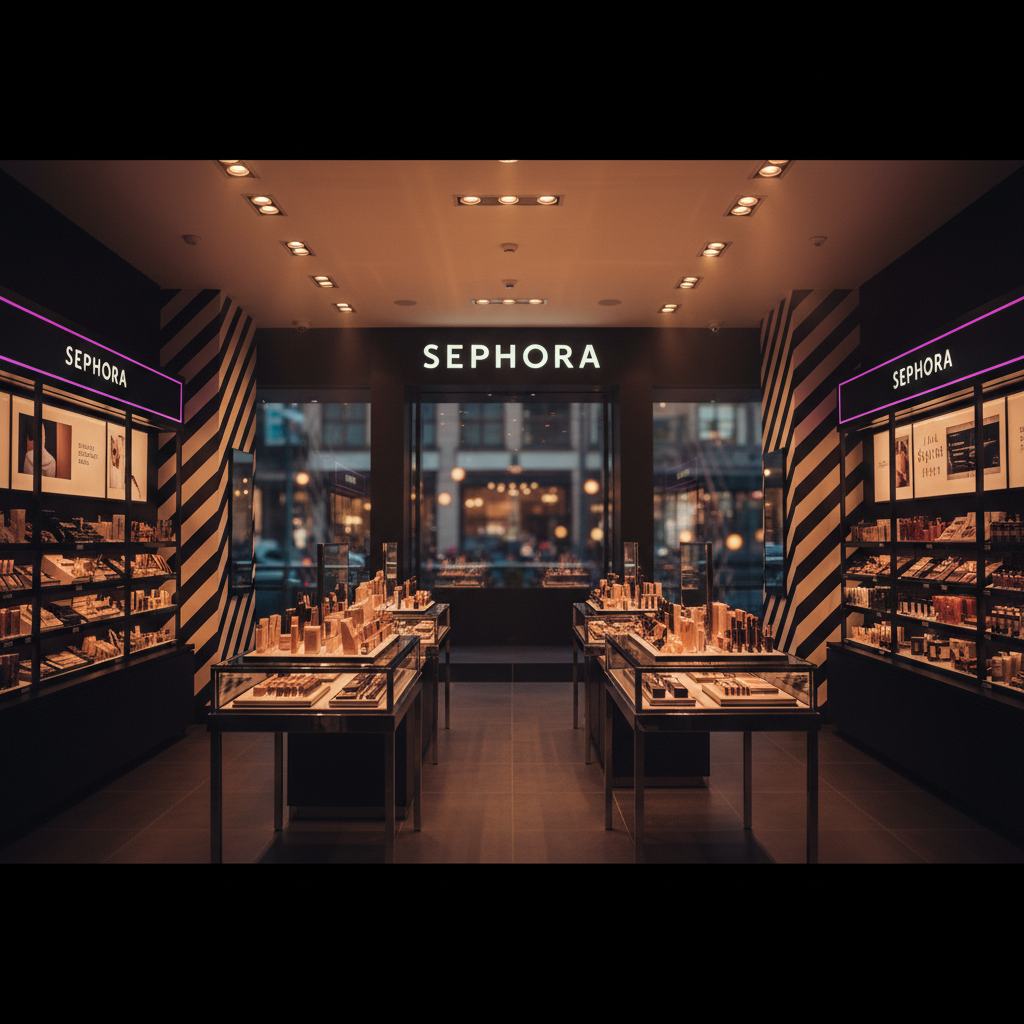
Sephora, the iconic beauty retailer with over 2,600 stores worldwide, is wholly owned by LVMH Moët Hennessy Louis Vuitton SE, the world's largest luxury goods conglomerate. If you're wondering who owns Sephora, the answer is straightforward: LVMH acquired the French beauty chain in 1997 for approximately $262 million and has since transformed it into a multi-billion dollar retail powerhouse that generates an estimated $10 billion in annual revenue.
LVMH Moët Hennessy Louis Vuitton owns 100% of Sephora's equity, making it a wholly-owned subsidiary within the conglomerate's Selective Retailing division. Unlike many retailers that operate as independent public companies, Sephora has no separate shareholders, no public stock listing, and no external investors beyond its parent company.
LVMH itself is a publicly traded company listed on Euronext Paris under the ticker MC. The luxury giant maintains a unique ownership structure where the Arnault family, led by chairman and CEO Bernard Arnault, controls approximately 47.4% of LVMH's shares and 63.5% of voting rights through the family holding company Financière Agache and related entities. This means the Arnault family ultimately controls Sephora's strategic direction, though day-to-day operations remain with dedicated management teams.
The remaining LVMH shares are held by institutional investors and public shareholders. Major institutional stakeholders include Baillie Gifford, Capital World Investors, and various index funds. This ownership structure gives LVMH the stability and long-term vision needed to invest heavily in Sephora's growth without pressure for quarterly profits that publicly traded retailers often face.
Sephora's story began in 1970 when Dominique Mandonnaud founded the company in Limoges, France. Mandonnaud revolutionized perfume retail by introducing an open-sell environment where customers could freely test products without sales associate assistance, a radical departure from traditional French perfumeries where products were kept behind counters.
The name "Sephora" combines the Greek word "sephos" meaning beauty with "Zipporah," the exceptionally beautiful wife of Moses in the biblical tradition. This clever branding positioned the retailer as a temple of beauty from its inception.
Throughout the 1980s and early 1990s, Sephora expanded across France, opening stores in major cities and refining its self-service concept. By 1993, the company had grown to 38 stores when it caught the attention of larger retail groups. That year, Mandonnaud sold Sephora to Nouvelle Galeries, a French retail conglomerate, which accelerated expansion plans.
Under Nouvelle Galeries, Sephora opened its flagship store on the Champs-Élysées in Paris in 1996, a 1,500-square-meter showcase that became a tourist destination in its own right. This expansion caught LVMH's attention as the luxury group sought to dominate the beauty retail landscape.
LVMH acquired Sephora in July 1997 for approximately 1.5 billion French francs (roughly $262 million at the time), purchasing it from Nouvelle Galeries. The acquisition was personally championed by Bernard Arnault, who recognized that controlling beauty retail distribution would complement LVMH's growing portfolio of prestige beauty brands.
At the time of acquisition, Sephora operated 84 stores, primarily in France, and generated annual revenues of approximately $200 million. The deal included assumption of debt and immediate plans for aggressive international expansion. LVMH saw Sephora as a strategic asset that could provide guaranteed shelf space for its own beauty brands while generating profits from third-party brand sales.
The acquisition timing proved prescient. The late 1990s marked the beginning of a beauty retail transformation, with consumers increasingly seeking experiential shopping and access to diverse brands. Sephora's open-sell model aligned perfectly with these emerging trends.
LVMH immediately invested in expansion, opening Sephora's first store outside France in 1998 in New York City's SoHo neighborhood. This marked the beginning of North American operations that would eventually become Sephora's largest market. The company also entered Spain, Italy, Poland, and Portugal in rapid succession.
LVMH Moët Hennessy Louis Vuitton SE is the world's largest luxury goods company, with a market capitalization exceeding $370 billion and annual revenues of approximately $86 billion as of 2023. The conglomerate operates 75 prestigious brands across five business divisions: Wines and Spirits, Fashion and Leather Goods, Perfumes and Cosmetics, Watches and Jewelry, and Selective Retailing.
The Selective Retailing division, which houses Sephora, also includes DFS (duty-free retail), Le Bon Marché (Parisian department store), and La Samaritaine. This division generated approximately $16.6 billion in revenue in 2023, with Sephora contributing an estimated $10-11 billion of that total, making it the division's crown jewel.
LVMH's business model centers on acquiring heritage brands with pricing power and cultural cachet, then providing them with resources for global expansion while maintaining brand autonomy. The company employs over 200,000 people worldwide and operates more than 5,500 stores across all divisions.
Bernard Arnault, age 75, has led LVMH since 1989 and built it through strategic acquisitions including Christian Dior, Bulgari, Tiffany & Co., and numerous other luxury houses. His net worth exceeds $200 billion, making him among the world's wealthiest individuals. This long-term ownership stability allows LVMH brands like Sephora to pursue decade-long strategies without short-term earnings pressure.
Under LVMH ownership, Sephora has expanded from 84 stores in 1997 to over 2,600 stores across 35 countries today. The transformation extends far beyond store count to encompass nearly every aspect of the business.
LVMH invested heavily in Sephora's store design and customer experience. The retailer introduced its signature black-and-white striped store design, professional Beauty Advisors with extensive product knowledge, and the Beauty Insider loyalty program which now has over 34 million members in North America alone. These investments required significant capital that a standalone company might have struggled to secure.
The parent company's financial strength enabled Sephora to weather economic downturns and competitive threats. During the 2008 financial crisis, when many retailers shuttered locations, Sephora maintained expansion plans. Similarly, during the COVID-19 pandemic, LVMH's backing allowed Sephora to accelerate digital investments and navigate temporary store closures without existential risk.
LVMH's prestige positioning elevated Sephora's brand partnerships. Having LVMH's endorsement made premium and luxury brands more willing to partner with the retailer, trusting that their brand equity would be protected. This access to exclusive brands became a key competitive advantage.
The ownership also brought operational sophistication. LVMH shared supply chain expertise, real estate negotiation power, and marketing capabilities across its retail portfolio. Sephora benefited from LVMH's relationships with shopping center developers, securing prime locations that independent retailers couldn't access.
Sephora operates a multi-channel retail model selling prestige beauty products across makeup, skincare, fragrance, hair care, and tools. The company generates revenue through several streams: third-party brand sales (approximately 85% of revenue), private label Sephora Collection products (roughly 15%), and services including beauty classes and makeovers.
The retailer's business model differs fundamentally from traditional beauty counters. Rather than employing brand-specific sales associates, Sephora trains generalist Beauty Advisors who can recommend products across all brands, creating a consultative shopping experience. This model generates higher productivity per square foot than department store beauty counters.
Sephora's contribution to LVMH has grown dramatically. In 1997, the acquisition added $200 million in revenue to a company generating approximately $8 billion annually, less than 3% of total revenue. Today, Sephora's estimated $10 billion contribution represents roughly 12% of LVMH's total revenue and perhaps 25% of operating profit in the Selective Retailing division.
The retailer's profit margins are attractive compared to other LVMH divisions. While exact figures aren't disclosed for individual subsidiaries, industry analysts estimate Sephora operates at EBITDA margins of 15-18%, benefiting from the high-margin beauty category and efficient store operations. This profitability funds continued expansion and digital investments.
Geographically, North America represents Sephora's largest market at approximately 55% of revenue, followed by Europe at 30% and Asia-Pacific at 15%. The North American market has been particularly strong, with Sephora capturing an estimated 20% market share of prestige beauty retail in the United States.
Sephora's relationship with LVMH's Perfumes and Cosmetics division creates both synergies and potential conflicts. LVMH owns prestigious beauty brands including Dior, Givenchy, Benefit Cosmetics, Fresh, Fenty Beauty, Acqua di Parma, and Marc Jacobs Beauty. These LVMH-owned brands receive prominent placement in Sephora stores, though the retailer maintains it allocates shelf space based on consumer demand rather than corporate politics.
The arrangement benefits both parties. LVMH beauty brands gain guaranteed distribution in Sephora's 2,600+ stores without negotiating individual contracts. Sephora secures exclusive products and early access to launches from these prestige brands, creating differentiation from competitors. For example, Fenty Beauty launched exclusively at Sephora in 2017, generating massive traffic and sales.
However, this relationship raises questions about fair treatment of non-LVMH brands. Competitors and some beauty brands have expressed concerns about whether independent brands receive equal opportunities at Sephora. The retailer maintains strict firewalls between buying decisions and LVMH corporate interests, with merchandise teams evaluating all brands using consistent criteria including innovation, brand equity, and sales potential.
LVMH has been careful not to make Sephora exclusively carry its own brands. Third-party brands from competitors like Estée Lauder, L'Oréal, and Shiseido occupy significant shelf space, comprising approximately 70% of Sephora's assortment. This diversity maintains Sephora's positioning as a multi-brand destination rather than an LVMH showcase.
The Sephora Collection private label, launched in 1999, represents another LVMH synergy. These affordable alternatives to prestige brands are manufactured through LVMH's supply chain partnerships, generating higher margins while offering value-conscious consumers accessible price points.
LVMH's global infrastructure accelerated Sephora's international expansion dramatically. The retailer entered the United States in 1998, opening stores in New York and Miami. By 2000, Sephora operated 70 North American stores. Today, the region hosts over 500 freestanding stores plus 600+ shops inside JCPenney locations (a partnership that launched in 2006).
European expansion leveraged LVMH's real estate relationships and regulatory expertise. Sephora entered Italy, Spain, Portugal, Poland, Czech Republic, Romania, and Greece throughout the 2000s. The Middle East became a key growth market, with stores opening across the United Arab Emirates, Saudi Arabia, and Qatar, often in luxury shopping malls where LVMH had existing tenant relationships.
Asia-Pacific expansion proved more challenging but ultimately successful. Sephora entered China in 2005, initially struggling against local competitors and different beauty preferences. LVMH invested heavily in market education and localized product assortments. By 2015, Sephora operated over 200 stores in China, and the market now represents significant growth potential.
The retailer's expansion strategy evolved under LVMH ownership. Early growth focused on flagship stores in major cities to build brand awareness. Later expansion targeted shopping malls and lifestyle centers in secondary markets. Most recently, Sephora has invested in smaller-format stores and shop-in-shop concepts to increase accessibility.
Digital expansion has been equally aggressive. Sephora launched e-commerce in the early 2000s and now generates approximately 30% of sales online. LVMH's technology investments enabled Sephora to pioneer features like Virtual Artist (AR-powered makeup try-on), same-day delivery, and omnichannel services like Buy Online Pick Up In Store.
Sephora operates with regional leadership structures under global coordination. Guillaume Motte serves as President and CEO of Sephora Americas, overseeing the largest revenue region. Motte joined LVMH in 2007 and previously served as President of Sephora Europe and Middle East before taking the Americas role in 2020.
Alia Gogi holds the position of President and CEO of Sephora Europe and Middle East, responsible for operations across dozens of countries. Gogi's background includes senior roles at L'Oréal and Estée Lauder before joining Sephora, bringing deep beauty industry expertise.
Artemis Patrick leads Sephora's global merchandising strategy as Executive Vice President and Chief Merchandising Officer. Patrick joined from Macy's, where she led beauty merchandising, and is responsible for brand partnerships and product assortment decisions that drive sales.
At the LVMH level, Chris de Lapuente serves as Chairman and CEO of the Selective Retailing division, overseeing Sephora's performance within the broader corporate portfolio. De Lapuente reports directly to Bernard Arnault and participates in LVMH's executive committee, ensuring Sephora's interests are represented at the highest corporate levels.
This leadership structure balances regional autonomy with global coordination. Regional presidents can adapt strategies to local markets while benefiting from shared services and best practices. The arrangement allows Sephora to operate entrepreneurially despite being part of a massive conglomerate.
The contrast between Sephora's ownership structure and that of its primary competitor Ulta Beauty illustrates different approaches to beauty retail governance. Ulta Beauty trades publicly on NASDAQ under ticker ULTA, with a market capitalization of approximately $20 billion. No single shareholder controls Ulta, with institutional investors holding roughly 90% of shares.
| Aspect | Sephora | Ulta Beauty |
|---|---|---|
| Ownership Type | Private (wholly-owned subsidiary) | Public company |
| Parent Company | LVMH | None (independent) |
| Market Cap | Not applicable | ~$20 billion |
| Major Shareholders | 100% LVMH (Arnault family controls LVMH) | Institutional investors: Vanguard (9.2%), BlackRock (7.8%), etc. |
| Global Stores | 2,600+ in 35 countries | 1,350+ (U.S. only) |
| Annual Revenue | ~$10 billion (estimated) | $10.2 billion (FY 2023) |
| Financial Reporting | Consolidated into LVMH | Standalone quarterly reports |
Ulta's public ownership creates different strategic pressures. The company must report quarterly earnings and faces scrutiny from analysts and activist investors. This can encourage short-term decision-making to meet Wall Street expectations. Ulta's stock price volatility reflects quarterly performance, with shares dropping significantly after disappointing earnings reports.
Sephora's private ownership under LVMH shields it from these quarterly pressures. The company can invest in long-term initiatives like international expansion or digital transformation without explaining temporary profit impacts to public shareholders. This patient capital approach allowed Sephora to sustain losses in new markets like China for years before achieving profitability.
However, public ownership offers Ulta advantages too. The company can use stock-based compensation to attract and retain talent. Public markets also provide capital access through equity offerings, though Ulta has generally funded growth through cash flow rather than stock sales.
The ownership difference affects competitive dynamics. Sephora can leverage LVMH's relationships with luxury brands and real estate developers, while Ulta emphasizes its independence and democratic approach to beauty retail, serving both prestige and mass-market segments.
Sephora's future under LVMH ownership appears focused on several strategic priorities that leverage the parent company's resources. Digital transformation leads the agenda, with investments in augmented reality, artificial intelligence for personalization, and social commerce. LVMH allocated significant capital for Sephora's technology infrastructure, viewing digital leadership as essential for competing with online-native brands.
Geographic expansion continues, particularly in Asia-Pacific markets. China represents enormous potential, with a growing middle class increasingly interested in prestige beauty. LVMH's experience launching luxury brands in China provides playbooks that Sephora can adapt for beauty retail. India also presents opportunities, with Sephora entering in 2017 and expanding steadily.
The retailer is diversifying revenue streams beyond traditional retail. Sephora at Kohl's, a partnership launched in 2021, places Sephora shops inside Kohl's department stores, targeting customers who might not visit traditional malls. This shop-in-shop model requires less capital investment than freestanding stores while extending Sephora's reach. The partnership aims to reach 850 Kohl's locations by 2023.
Sustainability initiatives align with LVMH's corporate commitments. Sephora introduced refillable packaging options, recycling programs, and carbon-neutral shipping. LVMH's 2023 environmental targets influence Sephora's operations, from store energy usage to supply chain emissions. These initiatives respond to younger consumers who increasingly consider environmental impact in purchase decisions.
Private label expansion through Sephora Collection continues. The brand now encompasses skincare, makeup, tools, and accessories at accessible price points. LVMH's manufacturing relationships and quality standards enable Sephora Collection to deliver premium quality at mass prices, creating differentiation from competitors while generating higher margins.
The beauty services business is expanding post-pandemic. Sephora reopened beauty services with enhanced sanitation protocols and introduced new offerings like skincare consultations and brow services. These services drive store traffic and create engagement beyond product transactions.
Looking forward, LVMH shows no indication of selling Sephora. The retailer has become too strategically valuable, both as a profit generator and as distribution for LVMH beauty brands. Bernard Arnault's long-term approach suggests Sephora will remain part of the family empire for decades, continuing to benefit from patient capital and global resources that few competitors can match.
Yes, Sephora is 100% owned by LVMH Moët Hennessy Louis Vuitton SE, the world's largest luxury goods conglomerate. LVMH acquired Sephora in 1997 for approximately $262 million and operates it as a wholly-owned subsidiary within its Selective Retailing division. The Arnault family controls LVMH through significant shareholdings and voting rights.
LVMH acquired Sephora in July 1997 from Nouvelle Galeries, a French retail group. At the time of acquisition, Sephora operated 84 stores primarily in France and generated approximately $200 million in annual revenue. LVMH paid roughly 1.5 billion French francs (about $262 million) for the beauty retailer.
No, Sephora is not publicly traded. It operates as a private subsidiary of LVMH, which is publicly traded on Euronext Paris. You cannot buy Sephora stock directly, but you can invest in LVMH shares (ticker: MC) to gain exposure to Sephora's performance along with LVMH's 75 other luxury brands.
No, Sephora does not own most brands it sells. The retailer operates primarily as a distributor, purchasing products wholesale from beauty brands and reselling them to consumers. The exception is Sephora Collection, the retailer's private label brand, which Sephora owns and controls completely. LVMH does own several beauty brands that Sephora carries, including Dior, Givenchy, and Fenty Beauty.
Sephora operates with regional CEO structures rather than a single global CEO. Guillaume Motte serves as President and CEO of Sephora Americas, the largest regional division. Alia Gogi leads as President and CEO of Sephora Europe and Middle East. At the corporate level, Chris de Lapuente serves as Chairman and CEO of LVMH's Selective Retailing division, which includes Sephora.
Sephora's ownership by LVMH since 1997 has fundamentally shaped the retailer's trajectory from a French perfumery chain to a global beauty powerhouse generating over $10 billion annually. The Arnault family's control of LVMH provides Sephora with patient capital, global infrastructure, and strategic stability that few retailers enjoy. This ownership structure has enabled aggressive international expansion, digital innovation, and sustained investment through economic cycles.
The relationship between Sephora and LVMH exemplifies how luxury conglomerates leverage retail distribution to complement brand portfolios. While Sephora maintains merchandising independence and carries competitors' brands, its LVMH parentage provides advantages in brand partnerships, real estate access, and financial resources. As beauty retail evolves toward digital channels and experiential shopping, Sephora's ownership structure positions it to adapt and invest without the quarterly earnings pressures facing publicly traded competitors. For the foreseeable future, Sephora will remain a cornerstone of LVMH's empire, benefiting from resources and vision that continue driving its global dominance in prestige beauty retail.


