
Venture building

Discover who owns Costco in 2024. Learn about major shareholders, institutional investors, founding family stakes, and the wholesale giant's ownership structure.
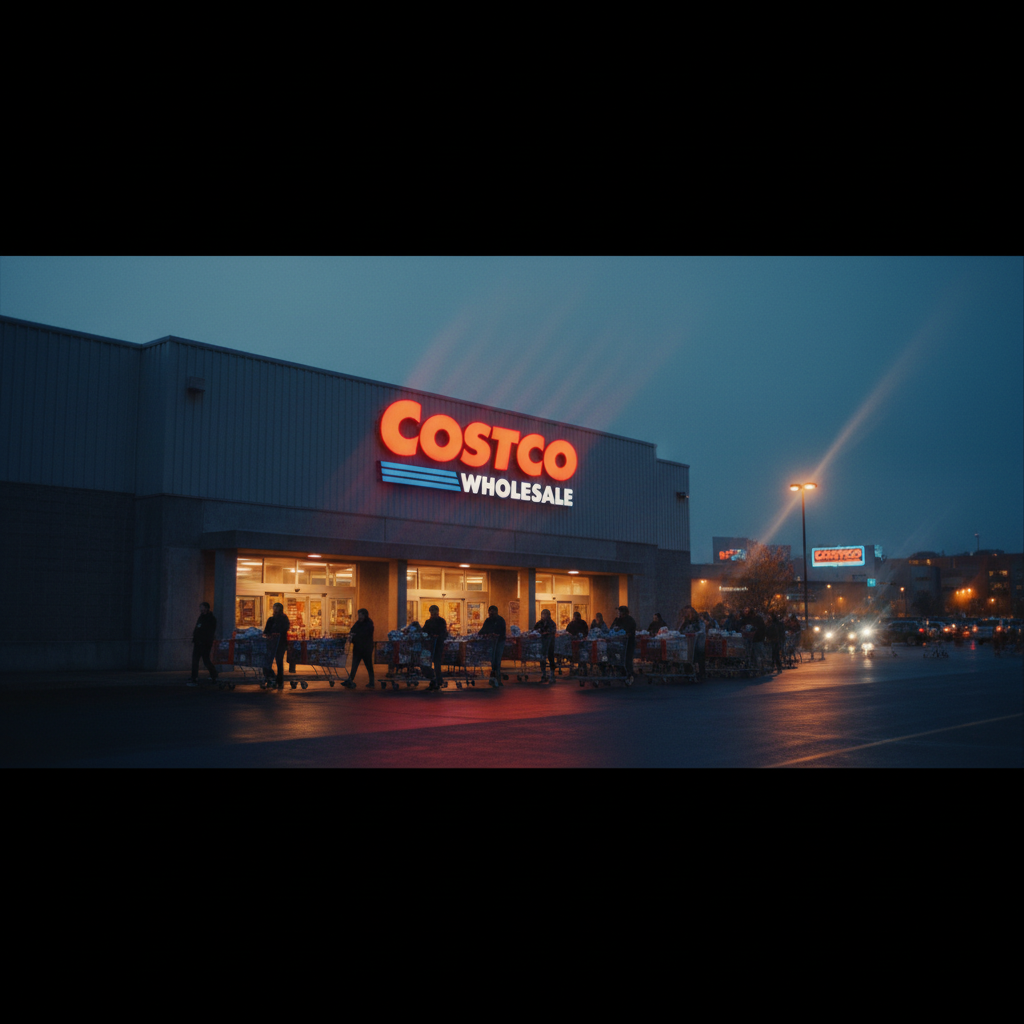
Costco Wholesale Corporation stands as one of America's most successful retailers, operating over 850 warehouses worldwide and generating more than $240 billion in annual revenue. For investors and business analysts wondering who owns Costco, the answer is clear: this warehouse giant is a publicly traded company with shares held by major institutional investors, founding family members, company executives, and millions of individual shareholders. Listed on the NASDAQ under the ticker symbol COST, Costco's ownership structure reflects the dispersed shareholding pattern typical of large-cap American corporations, though a few key institutional players hold significant stakes.
Costco operates as a publicly traded corporation with approximately 443 million shares outstanding as of 2024. The company went public in 1985, initially trading on the NASDAQ, and has maintained its public status for nearly four decades. Unlike privately held competitors such as specific regional wholesalers, Costco's shares trade freely on stock exchanges, allowing anyone to become a part owner by purchasing stock.
The company's ownership is highly diversified, with no single entity controlling a majority stake. Institutional investors collectively own approximately 70% of outstanding shares, while individual investors, company insiders, and retail shareholders hold the remaining 30%. This broad distribution of ownership prevents any single shareholder from exercising unilateral control over corporate decisions.
Costco's market capitalization regularly exceeds $350 billion, placing it among the most valuable retailers globally. The stock has delivered exceptional returns over the past two decades, with shares appreciating more than 800% since 2004. This performance has made early investors and long-term shareholders substantial wealth, while the company's governance structure ensures that management remains accountable to this diverse shareholder base.
The absence of a controlling shareholder means Costco's board of directors and executive team operate with considerable autonomy, guided primarily by fiduciary duties to all shareholders rather than the interests of a dominant owner. This structure has fostered a corporate culture focused on long-term value creation rather than short-term profit maximization.
Institutional investors dominate Costco's shareholder register, with the top ten institutional holders collectively owning over 50% of outstanding shares. These large financial institutions include mutual fund companies, pension funds, insurance companies, and investment management firms that hold Costco stock on behalf of their clients.
As of early 2024, The Vanguard Group leads all institutional investors with approximately 9.8% of Costco's outstanding shares, representing roughly 43 million shares worth over $30 billion. BlackRock, the world's largest asset manager, holds the second-largest position with approximately 7.2% ownership, or about 32 million shares valued at more than $22 billion.
State Street Corporation ranks as the third-largest institutional shareholder, holding approximately 4.1% of Costco's shares. These three investment giants alone control over 21% of the company, giving them substantial influence in shareholder votes and corporate governance matters.
Other significant institutional holders include Fidelity Investments, Geode Capital Management, and various pension funds. T. Rowe Price Associates holds roughly 1.8% of shares, while Wellington Management and Northern Trust also maintain positions exceeding 1% each. These institutions typically hold Costco shares across multiple investment products, including index funds, actively managed mutual funds, and exchange-traded funds (ETFs).
The concentration of ownership among index fund providers like Vanguard and BlackRock reflects Costco's inclusion in major market indices, including the S&P 500 and NASDAQ-100. Passive investment strategies have driven substantial capital into these positions, creating relatively stable, long-term ownership that rarely engages in active trading or corporate activism.
While institutional investors dominate the shareholder register, members of Costco's founding families and executive leadership maintain meaningful ownership stakes. James Sinegal, who co-founded Costco's predecessor Price Club with Sol Price in 1976 and later served as CEO from 1983 to 2012, reportedly held shares worth hundreds of millions of dollars during his tenure, though his current stake has diminished through sales and estate planning.
Jeffrey Brotman, who co-founded Costco with Sinegal in 1983, passed away in 2017. His estate and family members retain shares, though exact holdings are not publicly disclosed due to privacy arrangements. The Brotman family's stake represents a smaller percentage of the company than in earlier decades but remains financially significant given Costco's valuation.
Current CEO Craig Jelinek, who succeeded Sinegal in 2012, owns approximately 200,000 shares through various compensation plans and personal purchases. At current valuations, this stake exceeds $140 million, aligning his personal financial interests closely with shareholder outcomes. Other executive officers collectively own shares worth tens of millions of dollars.
Director holdings vary considerably, with most board members owning between 5,000 and 50,000 shares. These holdings, while substantial in absolute terms, represent tiny fractions of total shares outstanding. The company requires directors to maintain minimum ownership levels to ensure alignment with shareholder interests, though these thresholds are modest relative to the company's overall valuation.
Insider ownership totals roughly 0.3% of outstanding shares when combining all directors and executive officers. This low percentage is typical for large-cap public companies but contrasts sharply with founder-led firms where executives might control 10% or more of shares. The structure ensures that no insider has disproportionate voting power or the ability to block shareholder initiatives.
The Vanguard Group's position as Costco's largest shareholder deserves particular attention given the firm's unique structure and investment philosophy. Founded by John Bogle in 1975, Vanguard pioneered low-cost index investing and operates as a client-owned company rather than a publicly traded corporation. This structure means Vanguard has no external shareholders demanding profits, allowing it to focus solely on client returns.
Vanguard's Costco holdings span numerous funds, with the Vanguard Total Stock Market Index Fund and Vanguard 500 Index Fund representing the largest positions. Because Costco is a major S&P 500 component with a weighting around 0.8%, any fund tracking this index must hold proportional Costco shares. Vanguard's passive investment approach means it rarely sells these shares outside of rebalancing requirements or fund redemptions.
The firm's voting policies on shareholder matters typically favor management recommendations on routine business items while scrutinizing executive compensation and corporate governance proposals more carefully. Vanguard generally opposes activist campaigns and short-term value extraction strategies, preferring companies that reinvest in long-term growth. This philosophy aligns well with Costco's operational model of accepting thin profit margins to drive membership growth and customer loyalty.
Vanguard's stewardship of such a large Costco stake carries implications for corporate governance. While the firm avoids activist interventions, it engages privately with management on environmental, social, and governance (ESG) issues, executive pay structures, and board composition. These conversations occur behind closed doors but can influence corporate policies significantly.
The stability of Vanguard's position provides Costco's management with a reliable long-term shareholder base resistant to short-term market volatility. Index fund mechanics make it extremely unlikely Vanguard would ever liquidate its position, even during market downturns, providing a stabilizing force for the stock price.
Costco's ownership evolution reflects broader trends in financial markets and retail consolidation. When the company went public in 1985, founder ownership was substantially higher, with Sinegal and Brotman controlling significant percentages. Early institutional investors included traditional mutual fund companies and pension funds rather than today's index-fund-dominated landscape.
The 1990s saw gradual dilution of founder stakes through secondary offerings, stock-based compensation plans, and personal diversification sales. As Costco's market capitalization grew, the founders' percentage ownership declined even as the absolute value of their holdings increased. By 2000, no founder held more than 2% of outstanding shares, down from double-digit percentages in the 1980s.
The 2000s and 2010s witnessed the rise of passive investing, fundamentally reshaping Costco's shareholder base. Vanguard and BlackRock grew their positions dramatically as index funds attracted trillions in assets. By 2015, these firms had displaced traditional active managers as the largest shareholders. This shift reduced overall portfolio turnover and created a more stable ownership structure.
Charlie Munger, Warren Buffett's longtime business partner and vice chairman of Berkshire Hathaway, maintained a personal Costco investment separate from Berkshire's holdings for decades. His family's position, established in the 1990s, reportedly grew to several hundred thousand shares worth hundreds of millions before his death in 2023. This stake represented Munger's conviction in Costco's business model, which he frequently praised in interviews.
Recent years have seen continued consolidation among institutional holders as passive strategies dominate active management. Smaller mutual funds and hedge funds have reduced positions while index providers have grown theirs. ESG-focused funds have also accumulated shares, viewing Costco's employee compensation practices and operational efficiency favorably.
Costco's dispersed ownership structure creates a governance environment favoring long-term value creation over quarterly earnings management. Without a controlling shareholder demanding specific returns or strategic pivots, management can pursue patient growth strategies that might not maximize immediate profits but build sustainable competitive advantages.
The dominance of index funds among major shareholders reduces volatility compared to stocks with more active trader participation. Index funds generally hold positions regardless of short-term price movements, creating natural demand for shares and dampening panic selling during market corrections. This stability benefits long-term investors by reducing dramatic price swings.
However, index fund dominance also raises governance concerns. Critics argue these passive investors lack incentive to monitor management closely or challenge underperforming strategies. With hundreds of holdings, Vanguard and BlackRock cannot dedicate substantial resources to each company, potentially enabling management entrenchment. Costco's exceptional performance makes this less concerning than at struggling companies, but the broader governance implications warrant consideration.
The absence of activist investors or private equity firms in Costco's major shareholder ranks signals market confidence in current strategy. Activist campaigns typically target companies with perceived operational inefficiencies or strategic missteps. Costco's consistent execution and industry-leading metrics leave little room for activist critique, making such campaigns unattractive.
For potential investors, Costco's ownership structure suggests the company will continue its existing strategic approach rather than pivot dramatically. Management has demonstrated commitment to the membership warehouse model, even when analysts question specific decisions like maintaining low product markups. This consistency appeals to investors who understand and believe in the business model but may frustrate those hoping for strategic experimentation.
The relationship between Berkshire Hathaway, Charlie Munger, and Costco represents one of modern investing's most interesting stories. While Berkshire Hathaway itself holds a relatively small Costco position acquired in 2024, Charlie Munger maintained a substantial personal stake for over two decades, making it one of his largest non-Berkshire investments.
Munger's admiration for Costco's business model was well-documented. He praised the company's approach of treating employees well, offering quality products at minimal markups, and building customer loyalty through membership fees rather than maximizing per-transaction profits. This philosophy aligned with Munger's value investing principles emphasizing sustainable competitive advantages and ethical business practices.
Despite his enthusiasm, Munger never convinced Warren Buffett to make Costco a major Berkshire holding during his lifetime. Buffett occasionally cited valuation concerns, preferring to invest when shares traded at steeper discounts to intrinsic value. This disagreement became a friendly running joke between the partners, with Munger acknowledging Buffett's reluctance in various interviews.
Berkshire finally initiated a Costco position in 2024, purchasing approximately 4 million shares worth over $3 billion. While significant in absolute terms, this represents only about 1% of Costco's outstanding shares and a small fraction of Berkshire's total portfolio. The timing, shortly after Munger's death, led some observers to speculate whether the purchase honored his memory or reflected a reassessment of Costco's valuation.
The Munger family's holdings, accumulated over decades, remain substantial though exact figures are private. These shares represent not just financial investment but philosophical alignment with Costco's stakeholder-focused capitalism. Munger viewed Costco as proof that companies could simultaneously serve customers, employees, and shareholders without exploiting any group.
Costco's board of directors comprises twelve members, including CEO Craig Jelinek and eleven independent directors. This structure adheres to NYSE and NASDAQ governance standards requiring majority independent boards for listed companies. The board's independence ensures oversight of management decisions and protects shareholder interests.
Hamilton James, former president of Blackstone, serves as board chair, separating this role from the CEO position. This split prevents excessive power concentration and provides checks on executive authority. Other directors bring expertise from technology, retail, finance, and consumer goods industries, offering diverse perspectives on strategic decisions.
The board operates through several committees including Audit, Compensation, and Nominating/Governance committees. The Compensation Committee determines executive pay packages, attempting to align management incentives with long-term shareholder value. Recent years have seen increasing scrutiny of executive compensation from institutional investors, though Costco's pay packages generally receive strong shareholder support.
Director elections occur annually, with all board seats up for shareholder vote. This annual election cycle, rather than staggered multi-year terms, increases accountability by allowing shareholders to remove underperforming directors more quickly. Majority voting standards mean directors must receive more yes votes than no votes to win election, though contested elections are extremely rare.
Shareholder proposals occasionally appear on Costco's proxy ballots, typically addressing environmental sustainability, political spending disclosure, or governance reforms. Management generally recommends voting against these proposals, and they rarely achieve majority support given institutional investor voting patterns. However, the process allows minority shareholders to raise concerns publicly and gauge support for their positions.
Costco's governance practices receive generally positive ratings from proxy advisory firms like ISS and Glass Lewis. The company maintains strong board independence, reasonable executive compensation, and adequate shareholder rights protections. These ratings influence how institutional investors vote on board elections and management proposals.
Individual investors can easily purchase Costco shares through virtually any brokerage account. The stock trades on NASDAQ under ticker COST, with typical trading volumes exceeding 2 million shares daily ensuring high liquidity. Shares can be purchased during regular market hours (9:30 AM to 4:00 PM Eastern) or through extended-hours trading offered by most platforms.
Current share prices fluctuate around $700-$900 per share as of 2024, making single-share purchases significant investments for many individuals. Unlike some brokerages that offered fractional shares in the past, availability varies by platform. Investors should verify whether their chosen brokerage supports fractional share purchases if unable to afford full shares.
Several purchasing strategies exist for Costco stock. Long-term investors might simply buy shares outright and hold them indefinitely, collecting quarterly dividends (currently yielding around 0.6% annually) and benefiting from price appreciation. Dollar-cost averaging, where investors purchase fixed dollar amounts regularly regardless of price, can reduce timing risk by spreading purchases across various market conditions.
Options trading provides another avenue for Costco exposure, allowing investors to potentially profit from price movements with less capital. Call options grant rights to purchase shares at predetermined prices, while put options offer selling rights. These derivatives require more sophisticated understanding than simple stock purchases and carry additional risks including total loss of premium paid.
Index funds and ETFs provide indirect Costco ownership without purchasing individual shares. The SPDR S&P 500 ETF Trust (SPY), Vanguard Total Stock Market ETF (VTI), and countless other funds hold Costco as a component holding. This approach offers diversification across many companies simultaneously while maintaining Costco exposure proportional to its index weighting.
Tax considerations affect purchasing decisions for taxable accounts. Long-term capital gains (on shares held over one year) receive preferential tax treatment compared to short-term gains, encouraging buy-and-hold strategies. Dividend income faces taxation annually regardless of whether reinvested or taken as cash. Retirement accounts like 401(k)s and IRAs offer tax advantages making them attractive vehicles for Costco investment.
The Vanguard Group holds the largest stake in Costco with approximately 9.8% of outstanding shares, representing roughly 43 million shares worth over $30 billion. BlackRock follows as the second-largest shareholder with approximately 7.2% ownership. These positions are held across numerous index funds and actively managed funds rather than representing single concentrated positions.
The founding families maintain some ownership but their stakes have declined significantly from original levels. James Sinegal and Jeffrey Brotman's heirs hold shares, but combined they represent far less than 1% of outstanding shares. Most founder ownership was gradually sold or diluted over decades as the company grew and founders diversified their wealth.
No, Costco is not owned by Walmart or any other retailer. Costco operates as an independent publicly traded company with no controlling corporate shareholder. Walmart and Costco compete directly in the retail sector but maintain completely separate ownership structures and operate under different business models.
While exact figures remain private, Charlie Munger's family holdings reportedly include several hundred thousand shares accumulated over decades, potentially worth over $200 million. These shares represent Munger's personal investment separate from Berkshire Hathaway holdings. The family has not disclosed whether they intend to maintain or eventually liquidate this position following Munger's death in 2023.
Yes, any individual can purchase Costco stock through standard brokerage accounts. Shares trade publicly on NASDAQ under ticker COST with no minimum investment beyond the per-share price (typically $700-$900 as of 2024). Some brokerages offer fractional share purchasing, allowing investment with smaller amounts. No special qualifications or approvals are required to become a Costco shareholder.
Costco's ownership structure exemplifies modern public company capitalism, with dispersed shareholding among institutional investors, individual shareholders, and company insiders. The dominance of index fund providers like Vanguard and BlackRock creates stability while the absence of a controlling shareholder allows management operational independence focused on long-term value creation. Despite declining percentage ownership, founding families and executives maintain meaningful financial stakes aligning their interests with broader shareholders. This structure has supported consistent strategic execution and exceptional shareholder returns spanning decades, positioning Costco as one of retail's most successful and stable public companies. For investors considering ownership, understanding this shareholder composition provides valuable context about governance dynamics and likely future strategic direction.


